
How to Choose a Standard Walker
This page is the max-stability walker guide for shoppers who need to know when a standard walker beats any rolling option. It exists to answer a more specific question than the rollator pages: when is slower, more planted support the smarter choice for short indoor walking, early recovery, or steadier transfers around the home?
This section is built for shoppers balancing stability, rest breaks, and maneuverability comparing Rollator Walkers, Standard Walkers, and Upright Walkers for daily walking support at home, on errands, and during longer outings. Start with the options that match your space, support needs, and routine, then narrow by stability, seat comfort, and folded size.
Who should start with a standard walker first
Start here when the user needs the frame to stay put until they move it, not keep rolling between steps. That usually matters most after surgery, during short-distance home recovery, or anytime stability matters more than convenience.
If you want the faster next step
Use the broader page that matches your intent
Use the category page if you still need the broader product landscape before narrowing to a shortlist.
This page is for shoppers who know they need walking support but still need a faster way to narrow which type of mobility aid deserves the next click. It solves the problem of comparing walkers, rollators, upright walkers, and scooters as if they are interchangeable. Use this shortlist to decide quickly whether the real need is maximum stability, smoother movement with seated breaks, posture-focused support, or help covering longer distances without exhausting the user.
When a standard walker beats any rollator
A standard walker usually beats a rollator when the user is not ready for brake management, does not need a seat, and would feel less secure with a rolling frame. That is the real differentiation this page needs to own.
If this did not answer the exact question
Open the next guide in the same decision path
How to Choose Rollators for mobility aids shoppers. Use this guide to narrow fit, support, and space tradeoffs.
How to Choose Upright Walkers for mobility aids shoppers. Use this guide to narrow fit, support, and space tradeoffs.
Drive Medical Rollator Walker with Seat - Stable Mobility Support - Height Adjustable - Durable Steel Frame Construction - Smooth 7.5" Wheels - Foldable - 350 L
The lift-and-place tradeoff buyers need to accept
The cost of extra stability is effort. This page should help shoppers judge whether the user can comfortably lift and place the walker, move it through doorways, and handle the rhythm of use indoors without getting overly frustrated.
Related search paths
What to compare before buying
If this guide is only one part of the decision, use these live pages with recent search activity to compare models, product types, and buyer-fit details without starting over.
Useful when the next decision is support style, portability, seat needs, or indoor/outdoor handling.
Useful when the next decision is support style, portability, seat needs, or indoor/outdoor handling.
Useful when the next decision is support style, portability, seat needs, or indoor/outdoor handling.
Useful when the next decision is support style, portability, seat needs, or indoor/outdoor handling.
Useful when the next decision is support style, portability, seat needs, or indoor/outdoor handling.
Useful when the next decision is support style, portability, seat needs, or indoor/outdoor handling.
Useful when the next decision is support style, portability, seat needs, or indoor/outdoor handling.
Useful when the next decision is support style, portability, seat needs, or indoor/outdoor handling.
Useful when the next decision is support style, portability, seat needs, or indoor/outdoor handling.
Useful when the next decision is support style, portability, seat needs, or indoor/outdoor handling.
Useful when the next decision is support style, portability, seat needs, or indoor/outdoor handling.
Useful when the next decision is support style, portability, seat needs, or indoor/outdoor handling.
When this page should send you elsewhere
If the user needs longer distances, regular seated breaks, or easier rolling movement for errands and appointments, leave this page and compare rollators instead. If posture support is the real problem, upright walkers deserve their own look.
Buying guide
Treat this page as the stability-first decision path. Compare handle fit, frame width, lifting effort, and home layout before you compare model extras. The tradeoff is straightforward: standard walkers often give more control, but they ask more of the user with each step than rollators or other wheeled options.
If you are down to a narrower call
Use a comparison instead of rereading broad guidance
Compare a standard walker versus a folding walker when you are deciding between steady everyday support, easier storage, and a simpler fit for home use.
Compare a standard walker versus an upright walker when you are deciding between simpler indoor support and a more posture-focused, heavier-duty frame.
Compare a folding walker versus a rollator walker when you are deciding between simpler indoor support and a seat-equipped option for longer daily outings.
Recommended products
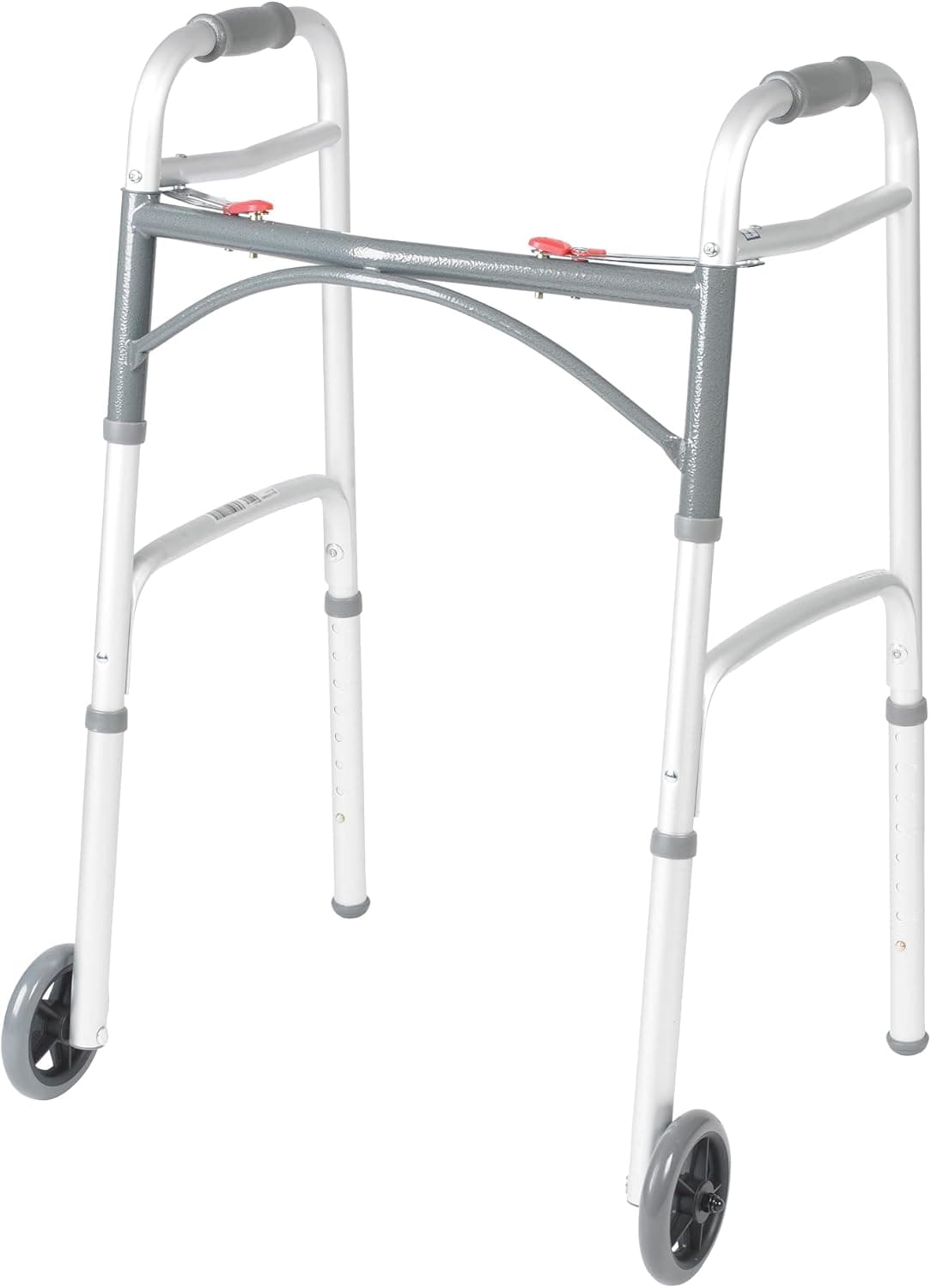
Drive Medical Two-Button Folding Walker w/ Wheels - Lightweight Rolling Mobility Support - Adjustable Height - Dual Push-Button Operation - 5 Inch Front Wheels - Durable Aluminum - Silver
Strong lightweight standard walker pick for daily use. Good for users who want front wheels and easy folding without a bulky frame.
- 350 lb capacity
- 5 in front wheels
- 7.5 lb aluminum frame
Prices and availability can change. Check the latest Amazon listing before you buy.
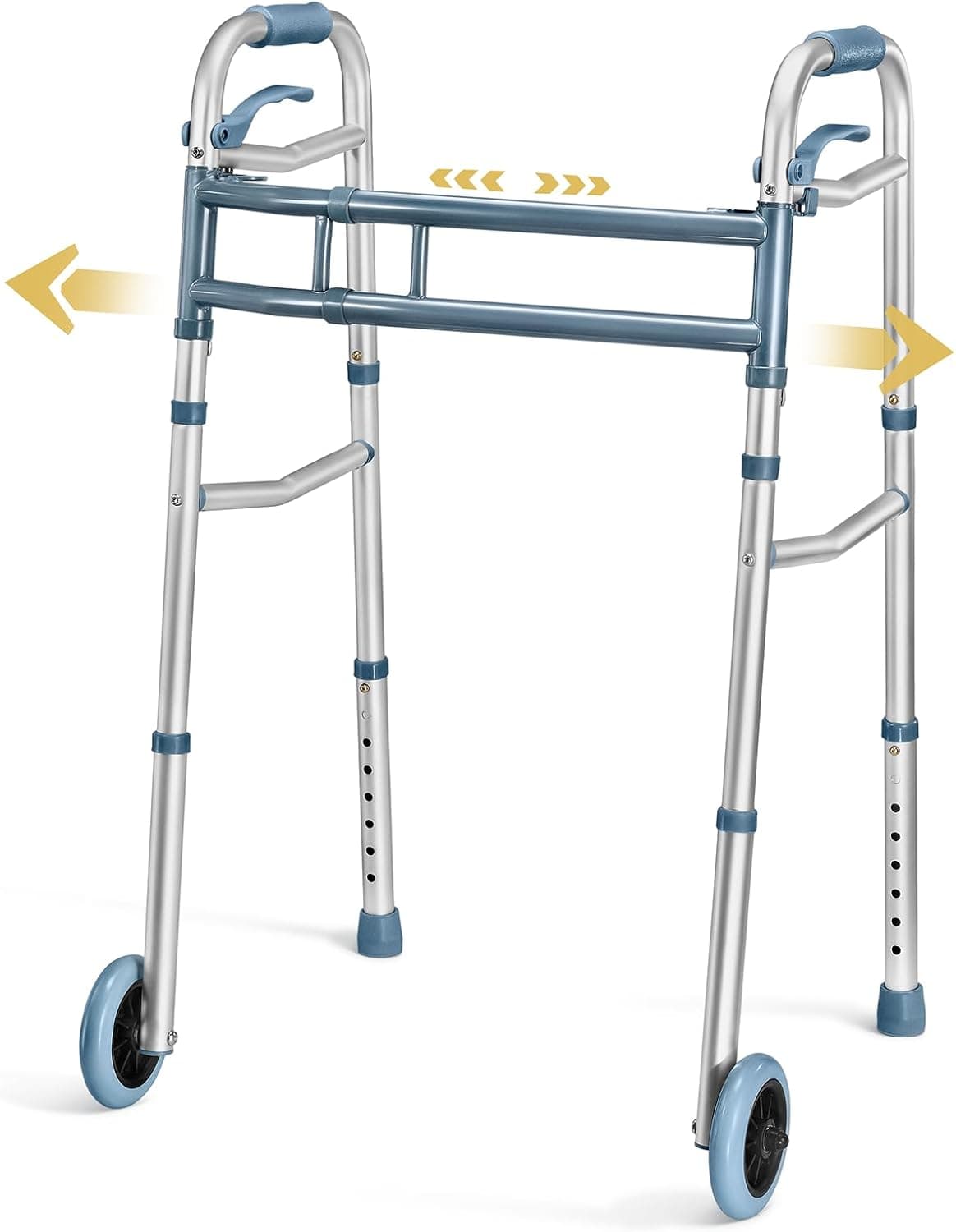
Medical king Walkers for Seniors Aluminum Lightweight Walker with Wheels, Adjustable Width and Height, Folding Walker for Elderly, Handicapped, Disabled 2 Wheels in Front
Useful lightweight walker for users who want a simpler rolling walker with front wheels and adjustable fit.
- Aluminum frame
- 2 front wheels
- adjustable width and height
Prices and availability can change. Check the latest Amazon listing before you buy.
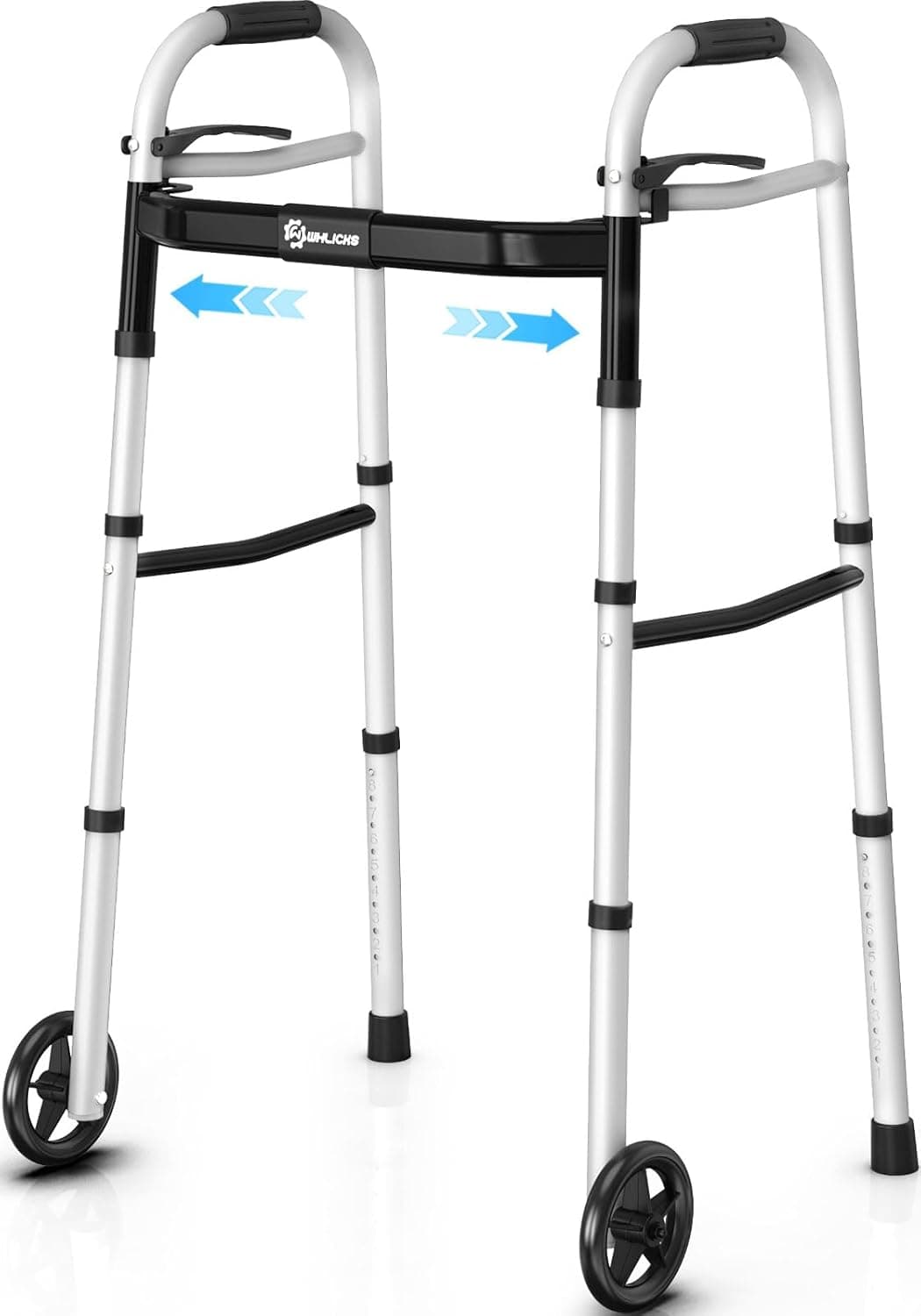
Narrow Folding Walkers for Seniors,Aluminum Lightweight Walkers with Wheels, Adjustable Width and Height Front Wheel Walker for Elderly and Disabled, Supports up to 350 lbs
Good tight-space walker for hallways, apartments, and narrower doorways where a standard walker feels too wide.
- 350 lb capacity
- narrow profile
- adjustable width and height
Prices and availability can change. Check the latest Amazon listing before you buy.
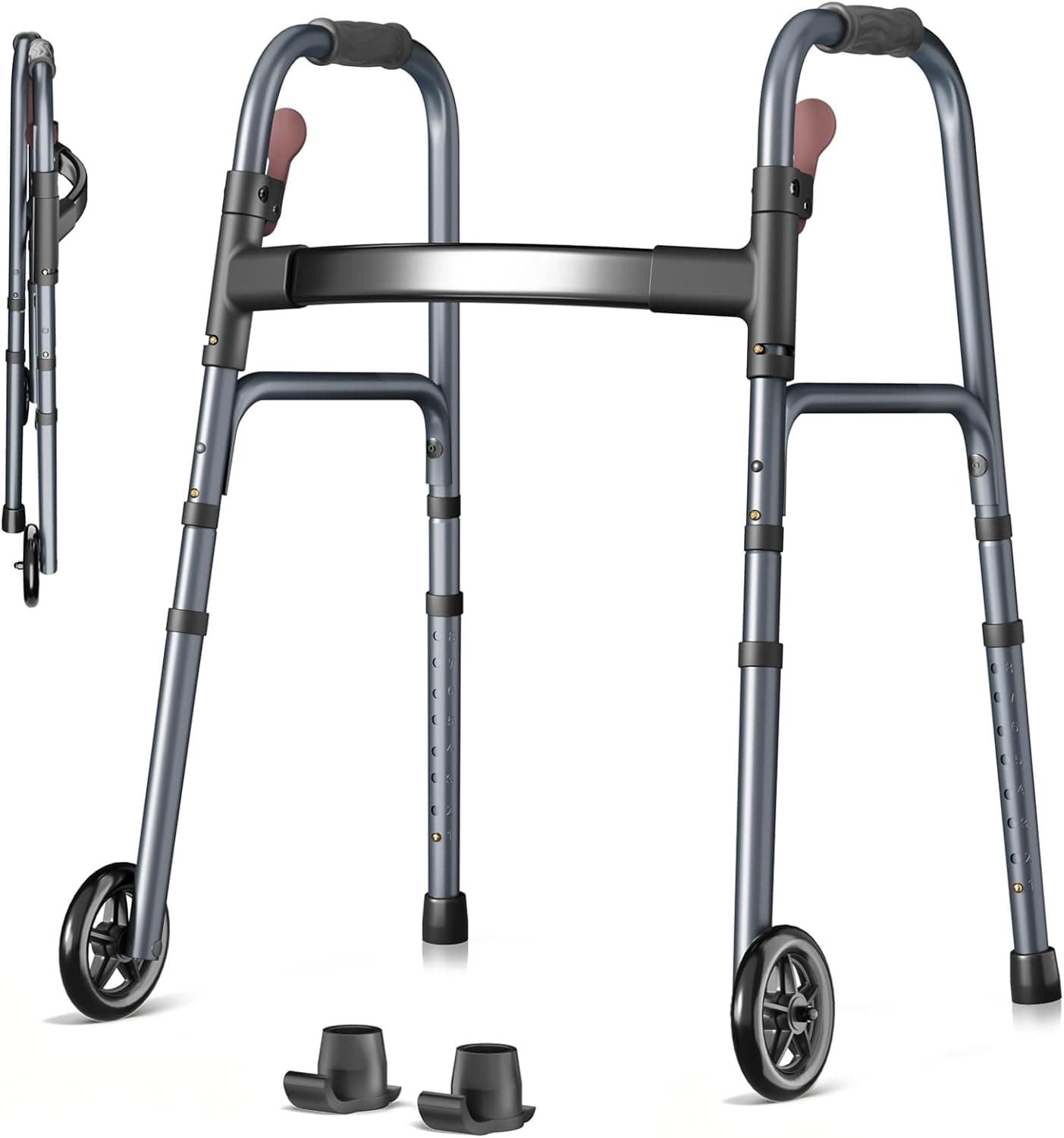
Folding Walker for Seniors, Rolling Walker with 8 Height Adjustments, One-Hand Folding, 300lbs Capacity, Lightweight Aluminum Front Wheel Walker for Elderly Adults and Handicap
Good convenience-focused standard walker for users who prioritize easy folding and fine-tuned handle adjustment.
- 300 lb capacity
- 8 height adjustments
- one-hand folding
Prices and availability can change. Check the latest Amazon listing before you buy.
FAQ
Who should use this standard-walker guide?
It is for shoppers who need to decide whether maximum planted support indoors is more important than the easier rolling movement that makes rollators attractive.
What is the biggest reason to choose a standard walker over a rollator?
The biggest reason is usually control. A standard walker stays put until the user moves it, which can feel more reassuring for recovery, short indoor routes, and users who do not want a rolling frame.
When should I leave this page and compare another walker type?
Leave this page when the user needs easier movement over longer distances, wants a seat for breaks, or is mainly shopping for posture support instead of maximum stability.