
Home Recovery & Bedside Equipment buying guide and product hub
Bedside equipment helps buyers compare rails, tables, trays, and recovery supports by bed compatibility, room footprint, transfer support, and how the setup works in everyday use.
This section is built for people building a safer recovery setup around the bed or recliner comparing Overbed Tables, Bed Rails & Assist Handles, and Bedside Trays & Tables for bed-rest tasks, reach, controls, transfer setup questions, and overnight environment planning. Start with the options that match your space, support needs, and routine, then narrow by bed compatibility, transfer support, and positioning.
Bedside equipment includes support products used around the bed or recliner to make transfers, recovery routines, eating, reading, and overnight safety easier to manage at home.
This category is for shoppers building a safer recovery setup around the bed, comparing rails, overbed tables, trays, and related support products that fit the room and the daily routine.
Use this category when bed entry and exit feel harder, when more time is being spent in bed during recovery, or when nighttime movement and bedside access need extra support.
Where to go next
Use the path that matches where you are in the decision
Start with products that are live in this category

Carex Bed Support Rail
Adjustable bed support rail with padded grip and non-slip pegs for easier bed entry and exit.
Verify the exact configuration and current destination details before you buy.
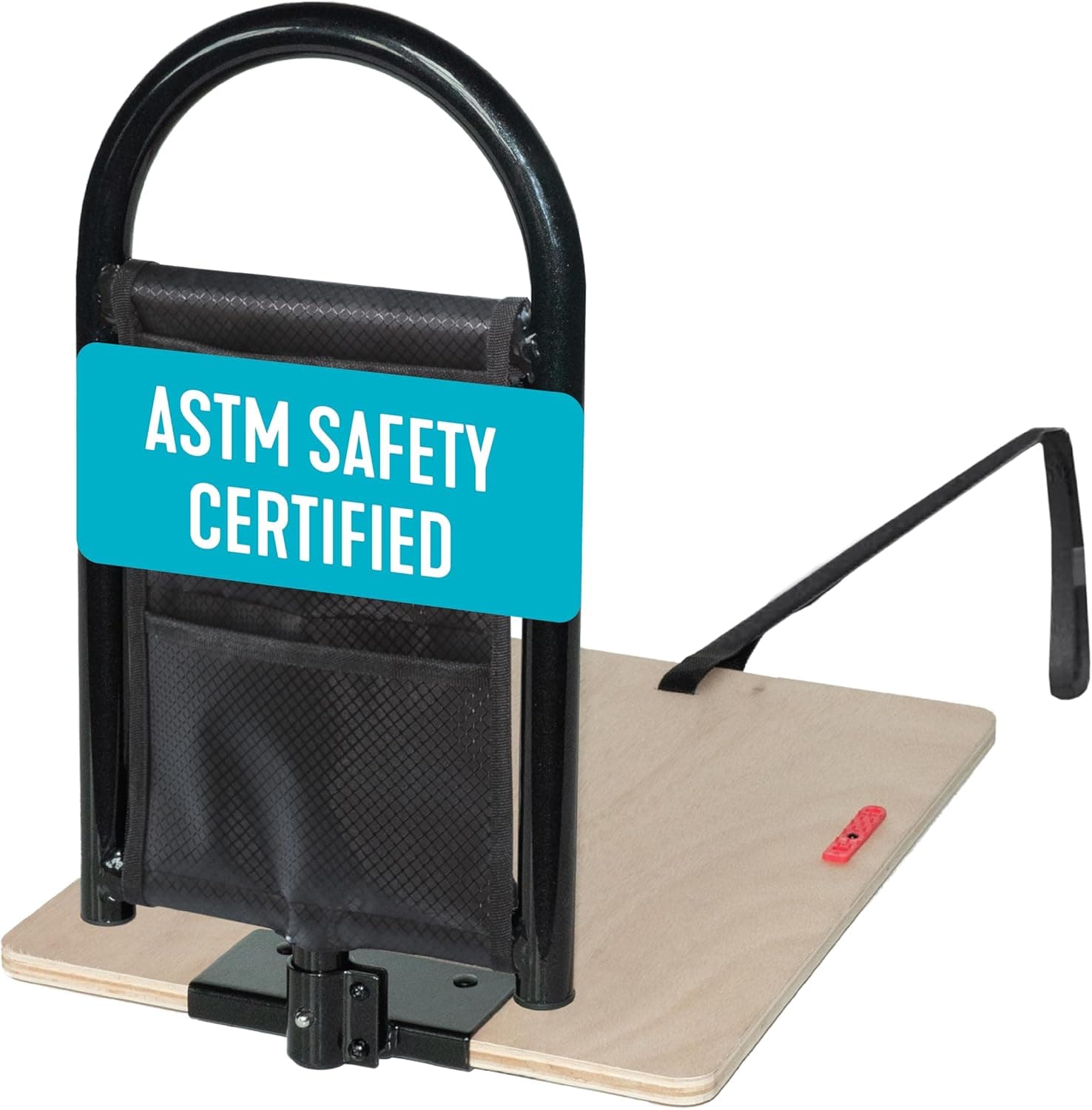
Stander BedCane
Compact bed-side support handle with safety strap for getting in and out of bed.
Verify the exact configuration and current destination details before you buy.
Carex Overbed Table
Large overbed table with C-shaped base, wheels, and height adjustment for eating or working from bed.
Verify the exact configuration and current destination details before you buy.
Roscoe Overbed Table Non Tilt
Simpler overbed table with hydraulic height adjustment and locking wheels.
Verify the exact configuration and current destination details before you buy.
Category overview
What matters most before you compare individual products
Who this category is for
Product types
When to use it
Common needs
Key decision factors
How to choose
Start with the hardest part of the bedside routine: standing up, repositioning, eating in bed, reading comfortably, or reducing overnight risk. Then compare bed compatibility, positioning range, and how much room the product needs around the bed.
Common use cases
This category is commonly used for post-surgery recovery, easier bed transfers, safer overnight movement, meals and reading in bed, and support setups that reduce awkward reaching for both users and caregivers.
What to avoid
Avoid assuming every rail fits every bed or that any overbed table will clear the base you already have. Bedside products become frustrating quickly when compatibility and room layout are treated as afterthoughts.
When NOT to use this category
Do not stay here if the main issue happens in the bathroom, during walking, or when getting in and out of a living-room chair. Those routines usually point toward a different category first.
Decision paths
Use the guide that matches the next decision
These pages separate the most common next steps so you can move from a broad category into a more specific routine, room setup, or support need.
Search-proven paths
Give these live pages a stronger crawl path
These pages have recent Search Console impressions, so they are useful next clicks when the category question is already getting narrower.
Open this page when it matches the next practical comparison or buying question.
Open the product page when the shortlist is already narrow and fit details need checking.
Open this page when it matches the next practical comparison or buying question.
Open the product page when the shortlist is already narrow and fit details need checking.
If you're not sure what to choose
Use these category-specific cues to narrow the right option faster
If getting in and out of bed is the biggest issue
compare bed rails and assist handles first.
If meals, reading, or laptop use happen from bed
an overbed table may be the most useful upgrade.
If recovery space is tight
measure carefully and prioritize compact designs with easier positioning.
Compare room footprint
Recovery products should fit the room without blocking daily movement.
Compare ease of cleaning
Use this factor to narrow the products that fit your routine first, then compare the finer details.
If you already know you want a shortlist
Start with a best page when you want the faster commercial path into the strongest current options before you compare every product one by one.
If you need education before you shortlist
Open the guides when the product type is still unclear, when room setup changes the answer, or when you need a narrower angle before trusting a roundup.
Use the finder when you know the use case but not the exact product yet.
See more decision-support pages across the full site.
Check overbed table height, base clearance, tabletop size, wheels, and bedside layout before comparing options for meals, reading, and daily tasks.
Learn how to choose a bedside table for eating in bed based on tray size, adjustment range, and bedside fit.
Learn how to choose a bed rail for overnight safety based on leverage, room fit, and nighttime transfer needs.
Find the best bedside equipment for small bedrooms based on footprint, bed clearance, and safer room flow.
Compare bedside recovery equipment for post-surgery use with a focus on bed access, eating in bed, and early recovery support.
Map practical in-bed tasks to equipment categories, measurements, compatibility checks, evidence status and specialist handoffs before choosing an item.
Record bedside room layout, paths, reach, lighting, controls, power, communication and unresolved questions before deciding whether equipment is needed.
Learn how to choose bedside support for bed transfers by leverage need, rail size, and fit with the actual bed setup.
Learn how to choose an overbed table by surface size, stability, adjustment range, and real recovery use.
Use this bed rail guide to decide when a bed rail is the right bedside support, what type of rail fits the transfer need, and when another bedside product is the smarter path.
Related categories people often compare next
FAQ
How do I know if I need a bed rail or an overbed table first?
Start with the harder task. If transfers in and out of bed are the main issue, a rail or assist handle usually comes first. If meals, reading, or laptop use from bed are the problem, an overbed table may be more useful.
What should I verify before buying a bed rail?
Check bed and mattress compatibility, attachment style, and whether the rail is meant for standing support, overnight reassurance, or both.
When does room size matter most in this category?
Room size matters most when the bed already sits close to walls or other furniture. A product that fits the bed but blocks movement around it can still be the wrong buy.
Who benefits most from an overbed table?
Overbed tables are especially helpful for people eating, reading, or working from bed or a recliner during recovery or longer daily routines.
What causes the most regret in bedside-equipment shopping?
Skipping compatibility and room-fit checks is a common mistake. These products are helpful only when they fit the bed, the room, and the exact routine they are meant to support.
HomeMedicalAdvisor content is informational only and does not replace medical advice, diagnosis, treatment, or guidance from a licensed clinician.
If two products still look too close to call
Use the comparison pages after the shortlist is narrower and the remaining question is about tradeoffs, fit, and everyday use between two realistic options.
No comparison pages yet
Start with the product list above, then compare features, size, and support level to build your own shortlist for now.