
How to choose a transfer bench
A transfer bench is worth considering when getting over the tub wall is harder than sitting during the shower itself. This guide explains how to choose one by checking the tub layout, seat size, weight capacity, support features, clearance, and setup needs before comparing product examples. A bench can make some tub-entry routines easier, but it does not guarantee safety or replace medical advice, caregiver judgment, or a home safety evaluation.
Bathroom Safety ownership
Transfer bench selection support
This guide owns transfer-bench selection support for tub-wall entry, seat position, and transfer style before product shortlisting.
Use measurements and manufacturer guidance before buying. Follow clinician or discharge instructions when recovery, surgery, or mobility limits are involved.
This section is built for people comparing seated bathing, tub-entry, toilet-height, and hand-placement equipment for a specific bathroom layout comparing Shower Chairs, Transfer Benches, and Grab Bars for showers, tub-entry setups, toilet support, and clinician-directed temporary home setups. Start with the options that match your space, support needs, and routine, then narrow by footprint, transfer stability, and grip.
When a transfer bench makes sense
A transfer bench is mainly for people who need to sit down before moving their legs over the tub wall. If the person can already enter and exit the bathing area safely but has trouble standing during bathing, a shower chair may be the simpler fit. If transfers are painful, unpredictable, or require hands-on help, review the setup with a clinician, occupational therapist, caregiver, or qualified home safety professional before relying on any bench.
If you want the faster next step
Use the broader page that matches your intent
Use the category page if you still need the broader product landscape before narrowing to a shortlist.
This page is for shoppers who need bathroom safety products to solve a specific transfer or stability problem, not for people browsing a generic list of grab bars and shower aids. It helps you narrow quickly by deciding whether the real issue is shower seating, tub transfer, toilet support, or a broader wet-space safety setup in a tighter bathroom.
Measure the tub and bathroom before comparing benches
Check the tub wall height, tub ledge shape, shower door or curtain setup, floor space outside the tub, and anything nearby that may block the transfer path, such as a toilet, vanity, door swing, or storage cabinet. A bench also needs enough room for the user to sit, turn, and slide without the legs rocking or crowding the caregiver. Tight bathrooms should be measured before a larger bench is chosen.
If this did not answer the exact question
Open the next guide in the same decision path
Use this shower chair guide to decide when a shower chair is the right bathing aid, which style of seated support fits best, and when to switch to a transfer-bench comparison instead.
Learn how to choose a raised toilet seat by transfer height, handle support, and bathroom stability needs.
Learn how to choose bathroom grab bars based on movement, stability need, and when a different bathroom aid is a better fit.
Compare shower chairs and transfer benches by tub entry, seated bathing needs, bathroom clearance, setup, and support boundaries.
Check seat size, weight capacity, and support features
Seat width and depth should support the user without making the bench too large for the room. Always compare the manufacturer listed weight capacity and do not exceed it. Backrests, armrests, and handles can help with positioning for some users, but they are not universal safety features. The right combination depends on transfer ability, balance, caregiver support, and whether the person can follow the transfer routine consistently.
Related search paths
What to compare before buying
If this guide is only one part of the decision, use these live pages with recent search activity to compare models, product types, and buyer-fit details without starting over.
Useful when shower, toilet, transfer, or small-bathroom setup details matter most.
Useful when shower, toilet, transfer, or small-bathroom setup details matter most.
Useful when shower, toilet, transfer, or small-bathroom setup details matter most.
Useful when shower, toilet, transfer, or small-bathroom setup details matter most.
Useful when shower, toilet, transfer, or small-bathroom setup details matter most.
Useful when shower, toilet, transfer, or small-bathroom setup details matter most.
Useful when shower, toilet, transfer, or small-bathroom setup details matter most.
Useful when shower, toilet, transfer, or small-bathroom setup details matter most.
Useful when shower, toilet, transfer, or small-bathroom setup details matter most.
Useful when shower, toilet, transfer, or small-bathroom setup details matter most.
Look closely at feet, drainage, and adjustability
A transfer bench should have feet that sit flat on the bathroom floor and tub surface according to the manufacturer instructions. Drainage holes, slip-resistant feet, and adjustable legs can matter, but only if the bench is assembled, leveled, and maintained correctly. Follow the product instructions for leg height, placement, cleaning, and inspection, and stop using a bench that shifts, rocks, or no longer fits the space.
When a shower chair may be the better fit
A shower chair can be more appropriate when the user can already step into the bathing area safely and mainly needs seated support while washing. It is usually smaller and may be easier to fit in compact bathrooms. A transfer bench is more relevant when seated tub entry is the problem. For example, AquaSense Adjustable Transfer Bench can illustrate the larger transfer-bench path, while Carex Shower Chair is better used as a contrast example for seated showering when tub entry is already manageable.
Safety note before buying
No transfer bench is safe for every person or every bathroom. The choice depends on the user's mobility, balance, transfer ability, caregiver support, tub layout, and correct setup. This information is educational only and does not replace medical advice or an in-home safety review. For difficult transfers, recent surgery, pain, limited balance, or uncertain caregiver positioning, ask a clinician, occupational therapist, or qualified home safety professional for guidance.
Buying guide
Choose a transfer bench by tub-entry difficulty, bathroom clearance, caregiver involvement, and whether seated showering alone would solve less of the routine.
Recommended products
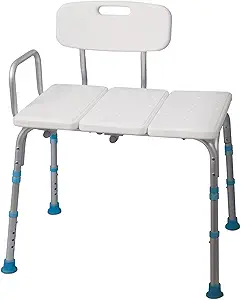
AquaSense Adjustable Transfer Bench
Adjustable transfer bench with a removable armrest for a seated tub-entry setup.
Verify the exact configuration and current destination details before you buy.
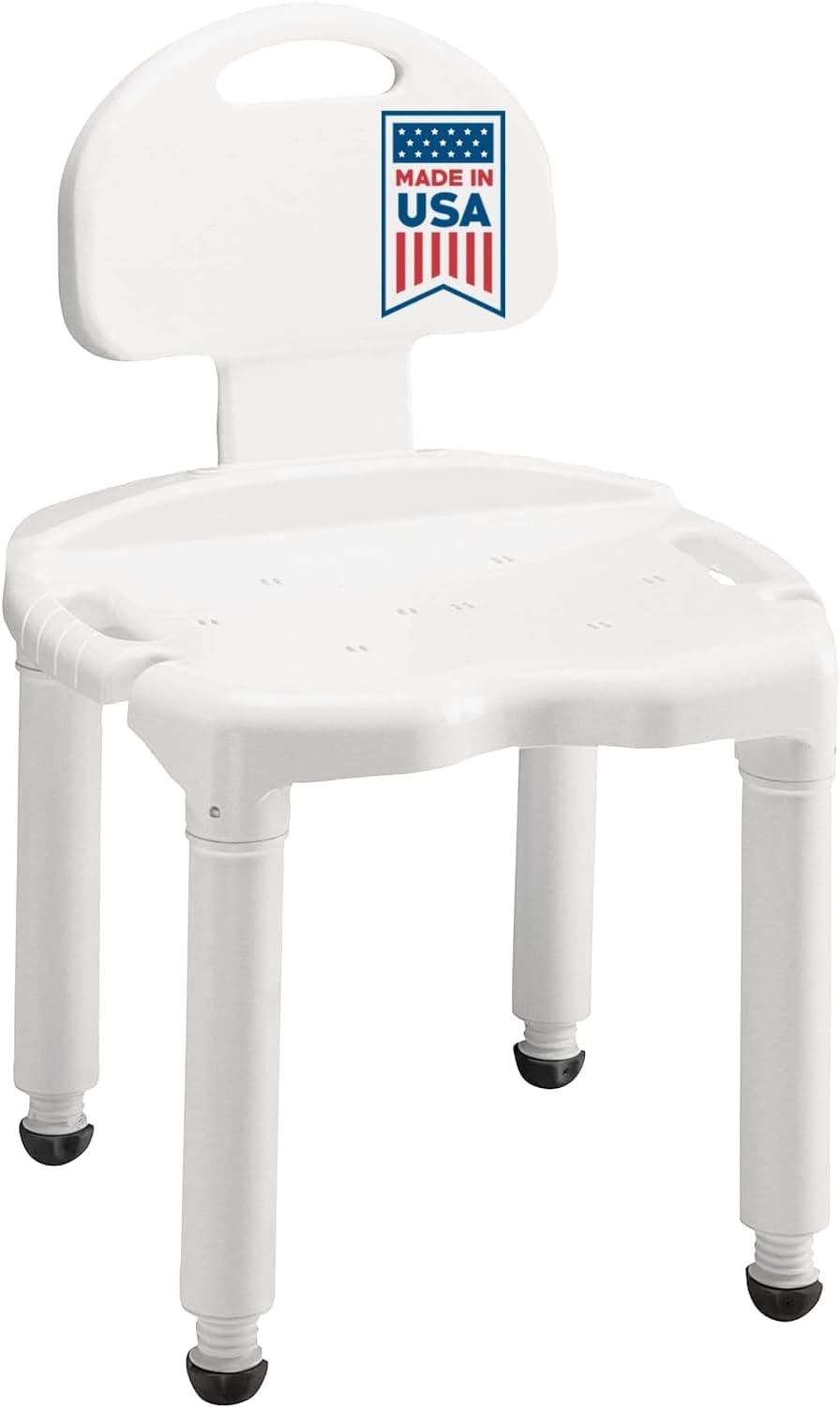
Carex Shower Chair
Adjustable shower chair with a curved seat and built-in handles for a seated bathing setup.
Verify the exact configuration and current destination details before you buy.
FAQ
When is a transfer bench better than a shower chair?
A transfer bench is usually more relevant when getting over the tub wall is the main challenge. A shower chair may be enough when the person can already enter and exit the bathing area safely but needs seated support while washing.
What should I measure before buying a transfer bench?
Measure the tub wall, tub ledge, floor space outside the tub, door swing, toilet or vanity clearance, and the room needed for a caregiver if one helps with transfers. Also compare the seat dimensions and manufacturer weight capacity.
Do transfer benches prevent falls?
No. A transfer bench does not guarantee safety or prevent falls. Fit, setup, user ability, balance, caregiver support, and following the manufacturer instructions all matter.
When should I ask a clinician or occupational therapist?
Ask for professional guidance when transfers are difficult, painful, unpredictable, or risky; after surgery or a major health change; when balance is limited; or when a caregiver is unsure how much help is needed.